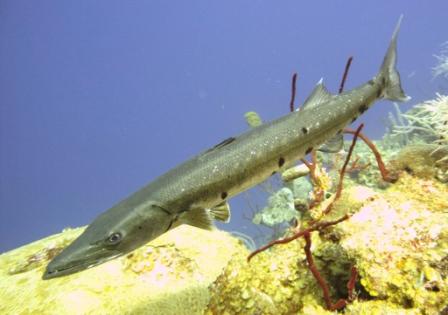
We cleared out of Honduras at Utila (a funky little backpacker/scuba diver island where you could smell the marijuana smoke while you waited to have your tanks filled (we didn't). From there we sailed to Livingstone, Guatemala, a distance of 120 miles, over-nighting at Puerto Escondido and Bahia La Grasiosa along the way. Nice down wind sailing. On March 12, at about 9:00 am, we crossed the bar at the mouth of the Rio Dulce river (Sweet Water in Spanish), thankful for our 4' draft as we didn't have to worry about waiting for a high tide. Boats drawing 6' or more sometimes have to be dragged over the bar to get into the river, luckily its soft mud/sand. We anchored off the little town and had an agent come out to us with a contingent of officials, 6 in total. They were very polite and efficient and completed all the paperwork themselves and were gone in 20 minutes. About an hour later they delivered the paperwork back to us on board, accepted our $130 and we were officially cleared in to Guatemala. Undoubtedly the easiest check-in we've ever had. By 11:00 am we were on our way up the river.
Up the Rio Dulce
Heading upstream from Livingstone we entered a steep, jungle-sided gorge that runs for about a dozen miles inland. The river is about 50m wide and with the exception of a couple of obvious (well they are if you're paying attention) sand bars, it is easy navigation. This is the magical place we have heard about for years. The jungle cascades in multi-green layers down the canyon walls to overhang the river. The air is still and the water slick and green. Masses of pelicans and gulls feeding. Truly spectacular! And all around is the life of the river. Fishermen fishing, kids paddling to school, women doing laundry. And carved out of the jungle along the banks, houses, shops, churches and even the odd little restaurant and hotel. There is a mix of tiny little dugout canoes that barely float, larger paddled canoes and the occasional outboard powered lanchas (fiberglass launches about 20' long). Everything and everyone moves by boat.

Fishing - luckily the fish are small, or he would be overboard!
Paddling to school.
The town of Fronteras, Rio Dulce.
After motoring up through the gorge, we then crossed the Golfetta, a large, shallow (8-10') lake. There was no wind and it was unbelievably hot (37C). The air was so humid that it felt like it was too thick to breathe. We re-entered the river, much wider and shallower now, and soon found ourselves (after dodging a few shallow spots less than 5') at the town of Fronteras and Mario's Marina.
Mario's Marina, Idyll Island's home for the next month. The restaurant and bar seen here get pretty active around Happy Hour and are a great place to meet new neighbours and find out more about the country, where to get the best food, the cheapest booze, etc. A very friendly group, some of whom have called Mario's home for seven years!
Street scene in Fronteras. A real frontier town. Always packed and bustling. The classic central American town. Armed guards (with 12 guage shotguns) outside even the smallest store. We didn't feel threatened in any way, though there were stories of active pickpockets and bank machine scams.
Local market stalls are found everywhere, along roadsides and dozens packed side by side in town - always busy and full of fresh Guatemalan produce. A nice change from most islands we visit where agriculture has been abandoned and everything imported. Locals rarely buy fruit and veg in a store though there actually is a small supermarket here. One surprise has been the huge, unappetizing looking carrots. They are actually tender, sweet and taste like carrots, unlike the lovely looking, slim, woody, tasteless type we ate in Canada. Supply is seasonal. If mangoes or avocados aren't in season then you can't fine them in the market. Avocado and mango season is just starting and it is fabulous.
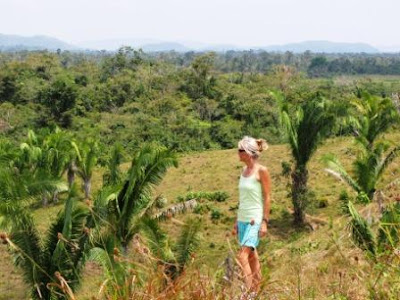
Just behind the marina, we walked 30 minutes through a tiny village and a rubber plantation - looked like a maple syrup forest with drip spouts and cans collecting the latex - and found ourselves in the Guatemala countryside. There is a wide, fertile coastal lowland and then the mountainous interior with many active volcanoes.
These little swallows came out to greet us as we got close to the marina. We thought they were cute. They soon became the bane of our existence at Mario's, perching and pooping all over the boat and trying to nest in the mainsail. Derek had a running battle with them.
We swallowed-proofed the boat as best we could, jumped on a bus (luxury coach) and traveled inland for 5 hours (fare $7.50) to reach the ancient city of Antigua.
Antiqua - a World Heritage Site
Antigua streets are packed after a parade. One of the three volcanoes surrounding the city in the background.
By the early 1500's the town was a Spanish center for trade and government. One of the churches, built as a seminary only 40 years after Columbus first 'found' America, has been restored many times after volcanoes and earthquakes and is now a lovely university. The streets are deeply cobbled which makes it tough to sight see and walk at the same time - and there is so much to see.
Where we went to school. Spanish lessons at L'escuela San Jose de Vieja. That's Derek's teacher, Gladys. Cathy's teacher was a lovely Mayan woman named Mirna. We took 6 days of lessons for 6 hours a day (1-on-1 instruction, for about $100 per week), including field trips and a couple of lunches. It was a great experience, though mentally exhausting. And we did learn some Spanish!
Recess. Small, open individual 'classrooms' surround the garden.
Our home at the San Jose school while studying and visiting Antigua. Several hectares of lovely gardens, sprinkled with traditional casitas (modern inside) are contained within the walled grounds, as are a pool and tennis court.
Graduation dinner, en Espagnol, naturellemente!
Time to get out and see some sights. Churches, lots of churches.... and dramatic ruins of large churches are found every couple of blocks.
Semana Santa, Easter celebration. Processions, Alfumbras and lots of local people swarming to Antigua to observe or be part of the procession. The Alfumbras (Spanish for 'mats') are prepared by people living along the streets that the procession will take. They are begun in the early hours of the three Sundays prior to Easter and are constructed of dyed sawdust meticulously formed into elaborate designs. These are enhanced with finer sawdust stenciling and sometimes syringe applied dye.
Detailed work
Varied subjects. Amazing works of art.
Masses of them. This one created by a nurseryman and family.
Waiting for the parade to start. These Mayan ladies look hot and tired, but it is the most important Catholic religious festival of the year for them. They may well have traveled in from outlying villages, probably crammed in the back of an open pick-up truck.
This "float" must weigh tons. These guys carry in shifts of about 10 minutes. The Processions are all about the painful journey of Christ to Calvary and they share the pain each year, actually three times before each Samana Santa.
And then the ladies with the Virgin Mary.
An intense and important religious celebration.
After the Procession has passed, the alfumbras are reduced to dust (some kind of symbolism here). The streets are cleaned with a few hours. Ready to do it all gain the following Sunday.
Lago Atitlan
Off to Lake titlan. We didn't walk all the way, just across this washed out bridge. The van followed. It was a 4 hour drive on the twistiest mountain road we've ever been on. Sheer cliffs dropping hundreds of feet, narrow roads, no guardrails.
Crossing Lake Atitlan by boat to our hotel. Relatively small volcanoes surround the 15 km lake, a huge caldera which formed when the main volcanic dome collapsed.
Hotel at Lake Attitlan. Note long pants! Its cool up here.
Breakfast on the deck looking out over (another) volcano.
Cooking up specific daisies to produce the yellow dye which coloured this yarn. Many beautiful, subtle and vibrant shades are created from local plants by traditional Mayan methods.
Weaving using a traditional 'tree' loom which is tied behind her back and would be attached to a tree if outside. How such perfect, straight fabrics are produced this way is a mystery to me. She is working on a simple piece, the intricacy of her skirt is normal. The women of the 8 villages perched on the shores of Lago Atitlan virtually all wear traditional heavy woven clothing. The light ''modern blouses are only seen on the hottest of days. Each village has its own unique colours and designs. We found table linens to match our boat colours in the village of San Juan.
Shopping. Interesting woven Mayan calendars.
Pacaya Volcano trip
Time to go and check out a volcano. We tagged along with a group of women from Patagonia. They were lots of fun and sang all the way up and down the trail (dancing in the dark).
Its up to you....
Hot hot hot! You can get as close as you want. Melt your shoes at 20' (we saw a guy who did and was having to walk 1km down over knife sharp lava in his socks). Back in North America, or any other litigious, nanny state, they would have evacuated a 10 km radius, years ago.
Toasting marshmallows in a hot vent. You can see the lava glowing through the crevices and smell the choking sulphur gasses. And in the time it took to toast the marshmallows, the crack opened another 3". The whole mountainside was slowly sliding down over the molten lava. And about 1000' above us, the top of the volcano was shooting glowing boulders and sparks into the darkening evening sky accompanied by huge bangs and rumbles. Truly awesome (and pretty dangerous if you actually think about it...).
Not sure which was more incredible, the volcano, or seeing Cathy eat a marshmallow!
Ruins of Tikal
Time to go and check out the fabulous Mayan ruins at Tikal. They cover15 sq. km, now protected within a 576 sq km park. Over 3000 structures have been mapped, of which only a relative handful have been excavated; temples, plazas, palaces, dormitories, vast courtyards, government buildings, decorative stelae, a huge tripleball court. Inhabited by over 90,000 people at its peak around 600-800 AD, they had proper water and sewage systems at a time when Europe lived in filth.
The Jaguar Temple
One small part of the Acropolis Norte
Temple V - built 600 AD. Note steep, rickety wooden stairway on left. We made it to the top!
One of the 7 temples surrounding Plaza de Los Siete Templos.
Giant Cieba tree, 'tree of life' to the Mayans. Those are huge buttress roots.
Knockin on Heaven's(?) door. The 'underworld' was an important aspect of the Mayan religion. An un-excavated temple in the jungle.
As interesting in a different way, were the jungle plants, animals and birds at Tikal. We did see lots of monkeys (spiders and howlers) but couldn't get a good pic of them as they move too fast.
Nests woven by Oropendulas. The adult birds are more than half the size of the nest and it looks as though they will burst it apart when scrambling their way in.
Gray- necked wood rail. Fearlessly shared the pond with his crocodilean friend.
This guy is about 7' long. We saw him catch and eat a giant bullfrog for breakfast. Took him 45 minutes to swallow it.
Koatimundi, related to anteaters. This one seems to prefer Snickers bars. He just finished licking a wrapper he found and is busy looking for more.
Still find the banana flowers exotic, though they are everywhere.
The top of the highest temple, #4. Morning mists have just cleared and temples rise out of the jungle behind us. And there are many that haven't yet been excavated, still buried beneath the jungle.
Dawn - time to take Idyll Island and head back down the river to the sea....